Choosing a Scope
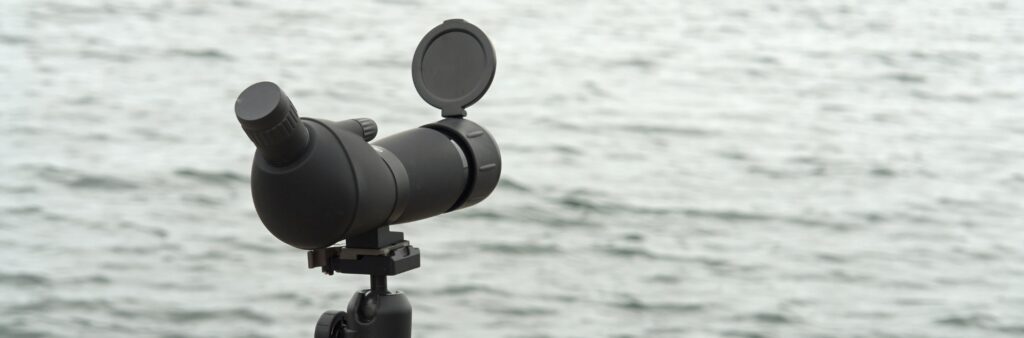
Like choosing a pair of binoculars, there are several different options to consider when choosing a spotting scope. So lets go over some of these options to choose from and some thoughts to consider when picking one out.
MAGNIFICATION
Most scopes are 20–60x.
You’ll probably use the 20-40x option the most.
Higher magnification sounds exciting, but: extra magnification also magnifies
- Heat distortion
- Wind
- Shaky tripods
You will probably only zoom in all the way when you have a bird in the view and need to see more finer details, like feather patterns of shape of the bill in shorebirds for example.
OBJECTIVE LENS SIZE
This is the larger lens at the front of the scope. They come in two main sizes.
You’ll usually see:
- 60–65mm – lighter, more portable
- 80–85mm – brighter, heavier
For new birders:
A 60–65mm scope is often the best starting point.
STRAIGHT VS ANGLED SCOPES
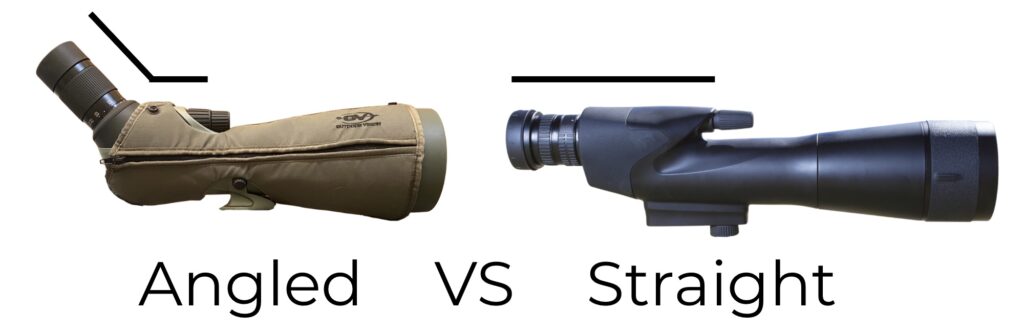
When you are looking at scopes, you’ll notice that they come in two main shapes, straight and angled.
Straight scopes:
- Easier to understand at first
- Faster to aim which makes them great Good for moving birds
- can be easier to pack away and not take up as much space.
If you plan on doing a lot of birding by car, this is also the better option to get, your scope can be mounted on the door for driving national wildlife preserves and an angled scope is pretty difficult to use in this way.
Angled scopes:
- More comfortable for long viewing
- Easier to share with groups
- Better for scanning wide areas
- They generally need a lower, more stable tripod over a straight scope.
There’s no wrong choice — comfort matters most.
Glass Quality
When you’re choosing a spotting scope, it’s easy to get caught up in big numbers and shiny specs. But one of the most important parts that actually affects what you see — especially in low light — is the quality of the glass and the lens coatings. All scopes, or binoculars with a 60 mm objective lens will let in the same amount of light, but the coatings and internal structure can really affect how much light ends up reaching your eyes. So lets briefly go over some of the possible lens and glass qualities and coatings you should be looking for when picking out a scope.
When scope manufacturers talk about “high-quality glass,” they usually mean: those that have:
- Fewer imperfections
- Better transmission of light
- Sharper contrast and clarity
- More accurate color
Lower-quality glass may still magnify, but you’ll see:
- Soft or blurry edges
- Low contrast in low light
- Color fringing (chromatic aberration)
- Loss of detail at long distances
For birding — especially in dawn/dusk conditions or looking far across water or wetlands — glass quality is a huge factor in how clearly you can identify birds and note their characteristics .
What Lens Coatings Do
Lens coatings optimize light transmission and reduce glare.
Here are the common coating terms you’ll see:
Coated
Some surfaces have a single anti-reflection layer — not great, but better than nothing.
Fully Coated
Every air-to-glass surface has a basic anti-reflection layer — decent entry-level quality.
Multi-Coated
Multiple layers on some surfaces — significantly better light transmission and color.
Fully Multi-Coated
Best of the lot: every air-to-glass surface has multiple coatings.
This means brighter, sharper, more contrasty images — especially in challenging light.
Why this matters:
- The more coated than higher quality glass will often show truer colors, even in suboptimal lighting
- High-quality coatings help enhance contrast, helping with the more subtle field marks
- They reduce flare and reflections when the sun is low
For serious birding, fully multi-coated optics are worth the investment.
So here is a quick overview of what qualities to look for when choosing a scope:
- Magnification
- Objective Lens Size
- Glass Coatings
- Angled vs Straight
- Your Budget